A bathroom mirror is one of the most important features in any bathroom. While it serves a practical purpose in your everyday routine, it also plays a significant role in the overall appearance, lighting and atmosphere of your space.
Whether you're designing a new bathroom, renovating an existing one or simply replacing an outdated mirror, finding the right option can make a remarkable difference.
With so many styles available, from traditional wall mirrors and contemporary LED designs to mirrored bathroom cabinets, knowing where to begin can feel overwhelming.
Should you choose a round or rectangular mirror? Is an LED bathroom mirror worth the investment? What size should your mirror be? And which features are genuinely useful?
This complete bathroom mirror buying guide answers those questions and more, helping you make an informed decision and find a mirror that combines beautiful design with everyday functionality.
1. Why Choosing the Right Bathroom Mirror Matters
A bathroom mirror is much more than a reflective surface.
It is often one of the first things you notice when entering the bathroom, particularly when positioned above a vanity unit or basin.
A carefully selected mirror can make a smaller room feel more spacious, reflect natural light, complement your bathroom fittings and create an attractive focal point.
The right mirror can also make everyday activities more comfortable, including shaving, applying makeup, styling hair and completing skincare routines.
Modern bathroom mirrors offer an increasingly wide range of practical features, including integrated LED lighting, demister pads, touch controls and adjustable colour temperatures.
Choosing the right mirror therefore involves balancing three important considerations: appearance, functionality and suitability for your bathroom.
2. Understanding the Different Types of Bathroom Mirrors
Before choosing a mirror, it's useful to understand the main types available.
Standard Bathroom Mirrors
Standard bathroom mirrors offer a simple, timeless solution.
They are available in a wide range of shapes, sizes and finishes, making them suitable for almost any bathroom design.
A frameless mirror creates a clean, minimalist appearance, while a framed design can introduce colour, contrast and decorative detail.
Standard mirrors are particularly suitable for bathrooms that already have sufficient lighting and storage.
Best for: Minimalist bathrooms, traditional interiors and homeowners looking for a straightforward, elegant mirror.
LED Bathroom Mirrors
LED bathroom mirrors incorporate lighting into the mirror design.
Depending on the model, the illumination may appear along the front of the mirror, behind the edges or in a combination of both positions.
LED mirrors can improve visibility around the vanity while creating a contemporary appearance.
Many models include additional features such as dimmable lighting, touch-sensitive controls, colour-temperature adjustment and demister technology.
Best for: Contemporary bathrooms, everyday grooming and bathrooms that would benefit from additional vanity lighting.
Illuminated Mirror Cabinets
Illuminated mirror cabinets combine a mirror, concealed storage and integrated lighting in one practical unit.
They are particularly useful where bathroom space is limited or where additional storage is needed.
Depending on the design, illuminated cabinets may include adjustable shelves, soft-close doors, demister pads and internal electrical features.
Best for: Family bathrooms, compact spaces and homeowners who want lighting and storage in one product.
Non-Illuminated Mirrored Cabinets
A non-illuminated mirrored cabinet provides useful storage without integrated lighting.
These cabinets offer a practical alternative to a standard wall mirror and can help keep toiletries and everyday essentials organised.
Best for: Bathrooms with sufficient existing lighting and a need for additional storage.
3. How to Choose the Right Bathroom Mirror Size
Choosing the correct size is one of the most important parts of buying a bathroom mirror.
A mirror that is too small may appear out of proportion, while an oversized mirror can overwhelm a compact vanity area.
The ideal size depends on your vanity width, available wall space, ceiling height and preferred design.
Bathroom Mirror Width Guide
As a general design guideline, a mirror that is approximately the same width as your vanity or slightly narrower often creates a balanced appearance.
| Vanity Width | Suggested Mirror Width |
|---|---|
| 450 mm | 350–450 mm |
| 600 mm | 500–600 mm |
| 800 mm | 650–800 mm |
| 1000 mm | 800–1000 mm |
| 1200 mm | 1000–1200 mm |
| Double vanity | One wide mirror or two individual mirrors |
These measurements are styling suggestions rather than strict rules.
For example, a large frameless mirror may look beautiful across an entire vanity wall, while a smaller decorative mirror can work well in a compact cloakroom.
What Height Should a Bathroom Mirror Be?
The mirror should provide a comfortable reflection for everyone who regularly uses the bathroom.
Consider the height of the basin, vanity unit and users when deciding where to position it.
A tall mirror can be particularly useful in a family bathroom, while a wide mirror may be preferable above a double vanity.
Before purchasing, measure your available wall space carefully and check for nearby cabinets, light fittings, taps and electrical connections.
Buying tip: Always check the product's exact dimensions, including its frame and any required installation clearances.
4. Choosing the Best Bathroom Mirror Shape
The shape of your bathroom mirror can significantly influence the overall design of your space.
Round Bathroom Mirrors
Round mirrors create a soft, balanced appearance and are particularly popular in modern and minimalist bathrooms.
Their curved shape contrasts beautifully with rectangular tiles, angular vanity units and straight-edged basins.
A round mirror works especially well above a single basin.
Rectangular Bathroom Mirrors
Rectangular mirrors offer a versatile, practical design.
They provide a generous reflective area and suit a wide range of vanity sizes.
A wide rectangular mirror can help visually expand a bathroom, while a tall rectangular design can emphasise ceiling height.
Oval Bathroom Mirrors
Oval mirrors combine the softness of a round mirror with the elongated proportions of a rectangular design.
They are an attractive option for narrow vanities and contemporary bathrooms.
A vertically positioned oval mirror can create an elegant, refined appearance.
Arched Bathroom Mirrors
Arched mirrors introduce architectural character with their distinctive curved tops.
They work beautifully in bathrooms featuring fluted cabinetry, natural stone and warm neutral colours.
An arched mirror is particularly effective when you want a decorative focal point without choosing an overly elaborate design.
Organic and Irregular Mirrors
Organic mirrors feature flowing, asymmetrical outlines inspired by natural shapes.
They can add personality to minimalist bathrooms and complement stone surfaces, textured tiles and curved basins.
Buying tip: Choose a mirror shape that complements the overall bathroom design rather than focusing on the mirror alone.
5. LED Bathroom Mirrors: Features Explained
LED mirrors have become a popular option for homeowners who want to combine contemporary design with useful technology.
However, not every LED mirror offers the same features.
Understanding the available options can help you choose a model that suits your needs.
Front-Lit LED Mirrors
Front-lit mirrors provide illumination from the front surface or an illuminated section around the mirror.
This can provide useful additional lighting for activities such as shaving, applying makeup and skincare.
For the most comfortable results, consider the positioning and distribution of the light rather than brightness alone.
Backlit LED Mirrors
Backlit mirrors project light onto the wall behind the mirror.
This creates a softer, decorative glow and can make the mirror appear to float.
Backlighting is particularly attractive in contemporary bathrooms with textured or neutral-coloured walls.
However, backlighting alone may not provide sufficient illumination for detailed grooming.
Dimmable LED Lighting
Some LED mirrors allow you to adjust the brightness.
This provides flexibility for different times of day and activities.
Brighter lighting may be useful during morning routines, while lower brightness can create a more relaxing atmosphere in the evening.
Adjustable Colour Temperature
Colour-temperature adjustment allows you to change the appearance of the light.
Common options include:
Warm white: Approximately 2700–3000 K, creating a softer, more relaxing atmosphere.
Neutral white: Approximately 3500–4500 K, offering a balanced appearance for everyday use.
Cool white: Approximately 5000–6500 K, providing a cooler, daylight-like appearance.
Available settings vary between products.
A mirror with adjustable colour temperature can be particularly useful when you want both practical grooming light and softer ambient illumination.
Touch-Sensitive Controls
Touch controls allow you to operate certain mirror features directly from the mirror surface.
Depending on the model, these may control lighting, brightness, colour temperature or the demister function.
Memory Function
Some illuminated mirrors include a memory feature that restores previously selected settings.
This can be convenient if you regularly use the same brightness or colour-temperature setting.
Buying tip: Check the individual product specifications carefully. Features such as dimming, colour adjustment and memory settings are not included with every LED mirror.
6. What Is a Demister Bathroom Mirror?
Condensation is a common problem in bathrooms, especially after a hot shower or bath.
A demister mirror is designed to help reduce condensation on the mirror surface.
Many demister mirrors contain a heating pad behind part of the glass. When activated, the pad gently warms the mirror surface, helping prevent moisture from condensing in that area.
This can make the mirror easier to use after showering without having to wipe away steam.
Are Demister Mirrors Worth It?
A demister function can be particularly useful in busy family bathrooms, ensuite bathrooms and spaces where condensation frequently affects visibility.
However, the heated area may cover only part of the mirror, and performance depends on the model and bathroom conditions.
A demister is not a replacement for effective bathroom ventilation.
Buying tip: Check whether the demister operates automatically with the lighting or has a separate control.
7. Choosing the Right Bathroom Mirror Frame Finish
Your mirror's frame finish can help connect the different elements of your bathroom.
Choosing a finish that complements your taps, shower fittings and accessories creates a more coordinated appearance.
Matte Black
Matte-black mirrors offer strong contrast and a contemporary look.
They pair beautifully with ivory, beige and greige walls, particularly when combined with matching black taps and accessories.
Brushed Gold
Brushed-gold frames introduce warmth and sophistication.
They are particularly attractive in bathrooms featuring cream tiles, warm stone and neutral cabinetry.
Bronze
Bronze provides a rich, understated metallic finish.
It complements earthy interiors, textured walls, fluted wood cabinetry and warm neutral colours.
Brushed Nickel
Brushed nickel offers a subtle metallic appearance with a softer finish than highly polished chrome.
It works well in contemporary bathrooms with neutral tiles and understated accessories.
Chrome
Chrome offers a bright, reflective finish that complements many modern bathroom fittings.
It is a versatile option for bathrooms where chrome taps and accessories are already installed.
Frameless Mirrors
Frameless mirrors create a clean, simple appearance and are particularly suitable for minimalist bathrooms.
They can also help a smaller bathroom feel less visually cluttered.
Design tip: Coordinate your main metallic finish across the mirror, taps and bathroom accessories for a consistent look.
8. How to Choose a Mirror for a Small Bathroom
Smaller bathrooms benefit from carefully selected mirrors that maximise light and space.
A large mirror can help make a compact room feel more open by reflecting its surroundings.
Frameless mirrors are particularly effective because they create a clean appearance without introducing a prominent border.
Tall oval or rectangular mirrors can help emphasise the height of a room.
If storage is limited, a mirrored bathroom cabinet may offer a more practical solution than a standard mirror.
For bathrooms with limited natural daylight, an illuminated mirror can provide additional light around the basin.
Consider pairing your mirror with a floating vanity, wall-mounted tap and light-coloured tiles to create an uncluttered appearance.
Buying tip: In compact bathrooms, prioritise proportion, useful lighting and practical storage over unnecessary decorative features.
9. Choosing Mirrors for Double-Basin Bathrooms
Double-basin bathrooms offer two attractive mirror arrangements.
The first option is to install one large mirror spanning both basins.
This creates a streamlined appearance and provides a generous reflective area.
The second option is to position two matching mirrors above the individual basins.
This creates a symmetrical design and gives each user a dedicated mirror.
Round, oval and arched mirrors work particularly well in pairs.
When choosing between these arrangements, consider the vanity width, basin positions, lighting layout and available wall space.
Design tip: Two matching mirrors with coordinated wall lights can create a luxurious, hotel-inspired bathroom.
10. Bathroom Mirror Safety and IP Ratings Explained
Electrical safety is an essential consideration when purchasing an illuminated bathroom mirror.
Bathrooms contain moisture and water, so electrical products must be suitable for the environment and their intended installation location.
What Is an IP Rating?
An IP rating, or Ingress Protection rating, describes the level of protection an electrical enclosure provides against solid objects and water.
For example, an IP44-rated product is protected against solid objects larger than 1 mm and splashing water from different directions.
However, an IP44 rating does not automatically mean that a mirror is suitable for every location in a bathroom.
Bathroom Electrical Zones
In the UK, bathroom electrical installations are subject to specific requirements under BS 7671.
The suitability of an illuminated mirror depends on factors including its installation location, the applicable bathroom zone, manufacturer instructions and electrical installation requirements.
Always check the product's specifications and have hardwired electrical mirrors installed by a suitably qualified electrician.
Important: Never assume that all illuminated mirrors can be installed directly above a bath or within a shower area.
11. How to Install a Bathroom Mirror Correctly
Correct installation is essential for safety, appearance and long-term performance.
Before installing your mirror, consider the following:
Wall construction: Identify whether the wall is solid masonry, plasterboard or another construction type. Different surfaces require suitable fixings.
Mirror weight: Check the product's weight and ensure the wall and fixings can support it.
Positioning: Measure carefully to ensure the mirror is centred and aligned with the vanity or basin.
Electrical supply: For illuminated mirrors, confirm that the electrical connection is suitable and safely positioned.
Manufacturer instructions: Always follow the installation guidance supplied with the product.
For large, heavy or electrically powered mirrors, professional installation is strongly recommended.
12. How to Clean and Maintain Your Bathroom Mirror
Regular cleaning helps keep your mirror looking its best.
Use a soft microfibre cloth to remove fingerprints, watermarks and everyday marks.
For more stubborn marks, use a cleaning solution suitable for the mirror and its frame.
Avoid abrasive cleaners, rough sponges and harsh chemicals that may damage the reflective surface or surrounding finish.
Rather than spraying liquid directly onto the mirror, apply a small amount to a cloth. This helps prevent moisture from collecting around the edges or entering electrical components.
For LED mirrors, follow the manufacturer's cleaning instructions and avoid exposing touch controls or electrical fittings to excessive moisture.
Good bathroom ventilation can also help reduce prolonged condensation.
13. Common Mistakes to Avoid When Buying a Bathroom Mirror
Choosing a bathroom mirror is easier when you know which mistakes to avoid.
Buying Without Measuring
A mirror may look perfectly proportioned in a product photograph but be unsuitable for your bathroom.
Always measure the available wall space and check the actual product dimensions.
Ignoring Lighting Requirements
A decorative backlit mirror may look beautiful but may not provide enough direct light for detailed grooming.
Consider your overall bathroom lighting arrangement.
Choosing Style Over Functionality
An attractive mirror should also be comfortable to use.
Think about reflection height, lighting, storage and everyday routines.
Overlooking Bathroom Suitability
Not every mirror or electrical product is designed for humid bathroom environments.
Check the manufacturer's guidance before purchasing.
Forgetting About Existing Finishes
A mirror that clashes with your taps, tiles or cabinetry can make the room feel less coordinated.
Consider the complete bathroom design before choosing a frame finish.
Assuming Every LED Mirror Has the Same Features
Demisters, dimmers, touch controls and colour-temperature settings vary between products.
Read the specifications carefully to understand exactly what is included.
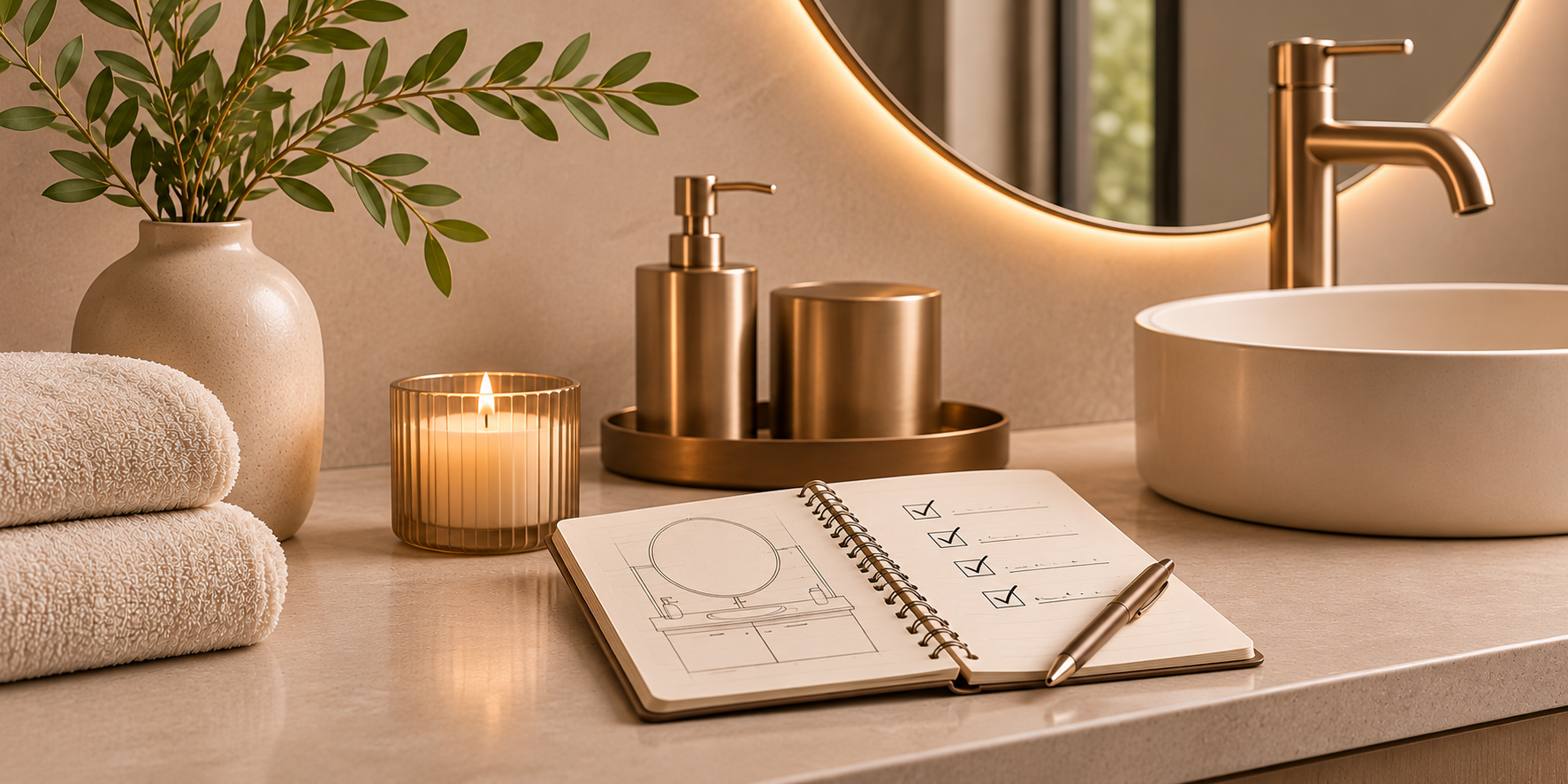
14. Bathroom Mirror Buying Checklist
Before ordering your new bathroom mirror, use this simple checklist.
Measure the available wall space.
Check the width and height of your vanity.
Choose a mirror shape that complements your bathroom.
Decide whether you need LED lighting.
Consider front-lit or backlit illumination.
Check whether dimming and colour-temperature adjustment are important.
Decide whether a demister function would be useful.
Choose a frame finish that complements your fittings.
Consider whether you need integrated storage.
Check the mirror's weight and fixing requirements.
Verify bathroom suitability and any relevant IP rating.
Review the installation instructions and electrical requirements.
Confirm the exact dimensions and product features before purchasing.
Taking a few minutes to review these points can help you choose a mirror that suits both your bathroom and your everyday needs.